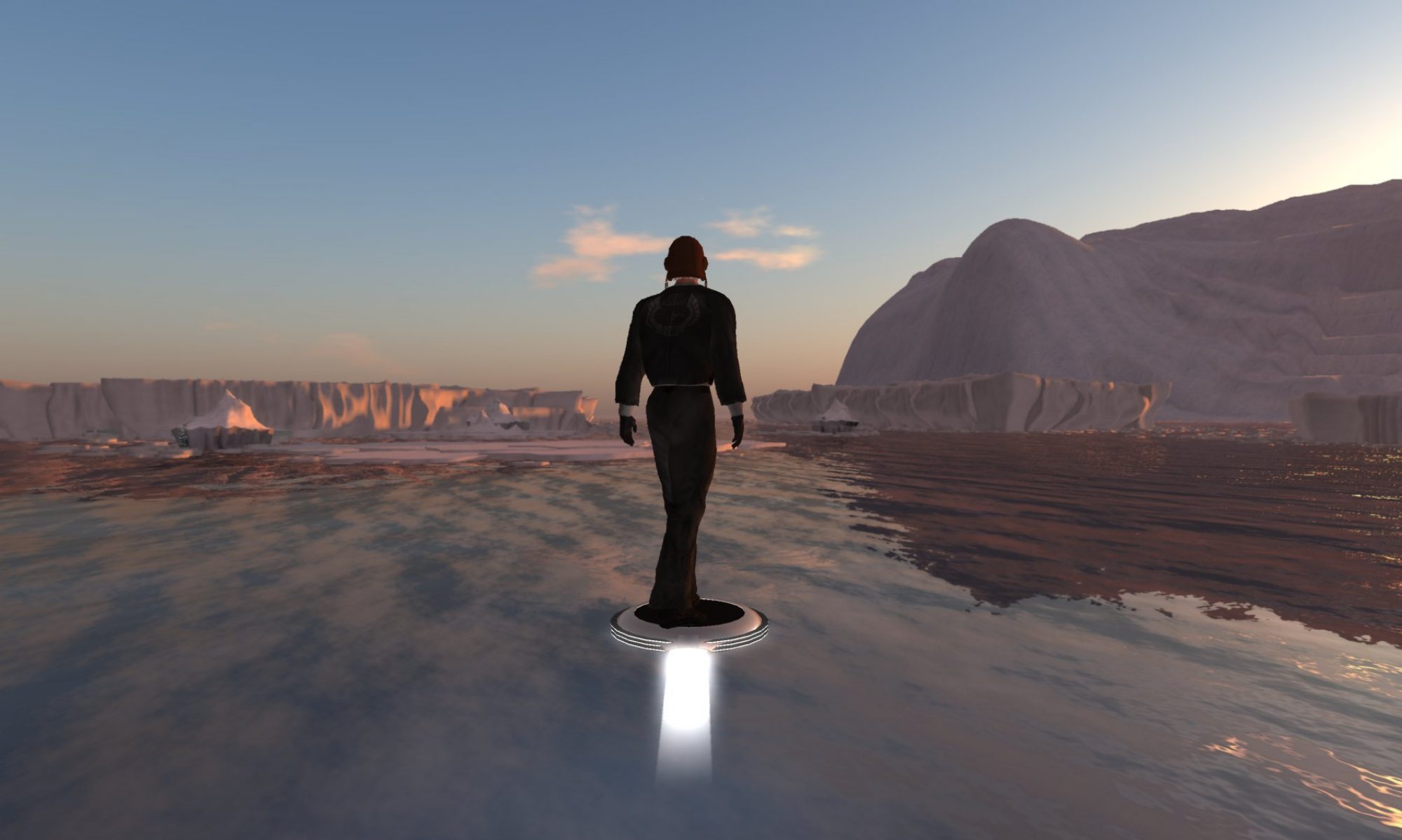

Balloonist Michio Kanda missing

According to CNN.com, the US Coast Guard is searching for balloonist Michio Kanda after he failed to check in by satellite phone. Kanda was attempting a solo crossing of the Pacific by hot air balloon, and went missing off the coast of Alaska.

Read said two Coast Guard C130 Hercules planes conducted searches Thursday 435 miles south of Adak, Alaska, the balloonist’s last known position. The searches continued Friday and are ongoing, Read said.

(CNN.com)

He carried supplies and survival gear, but it certainly sounds bad. Hopefully, it’s just a problem with the radio.

Update (Feb. 4): On the assumption that Kanda would have ditched in the ocean, Coast Guard continues to search for his capsule.

They are using computer-aided drift simulation to estimate the current position of the capsule. Based on these computer simulations and weather observations, they are explanding tomorrow to the Northeast to encompass a larger area.

A 378 foot Coast Guard cutter is on its way – estimated arrival 7 or 8 February. They have a helicopter on board, which they will use if weather allows.

(Link: kandaupdate.wordpress.com: “Report from US Coastguard in Juneau“)

Flying with a keyboard

Each day, hundreds of visitors teleport to Abbotts Aerodrome to experience the thrill of being a virtual pilot. And while Second Life is not a proper flight simulator, like Microsoft FSX, Linden Lab has given us the tools to create aircraft that are both entertaining and capable of reasonably realistic flight. Part of the appeal of Second Life over FSX is that SL is a social environment: unlike FSX, you can sit your friend in the passenger seat and take them on a tour.

Flight in Second Life also has serious shortcomings — in particular, there’s the annoying absence of joystick support. This single failing has frustrated and confused many novice pilots who aren’t familiar with standard keyboard controls. I hear the question, “I’m pressing ‘up’… why isn’t the plane going up?” surprisingly often. It might seem counter-intuitive, but there is a good reason why the keyboard controls work the way they do. Even as long ago as the early ’80s, with subLOGIC’s popular flight simulator for the Apple II and TRS-80 , the basic controls for keyboard flight were clearly established. These controls are still the standard a quarter century later, in FSX.

Flight control systems (Wikipedia.org)Imagine your numeric keypad as an airplane’s control stick, with the stick planted in the centre on the “5” key. Left and right arrows control the aircraft’s ailerons, which make the plane roll left and right. Up and down keys control the elevators, and making the plane pitch down and up. This is actually the part that many people find confusing: You push the stick forward (up arrow) to make the elevators go down, which makes the plane’s nose go down; you pull the stick back (down arrow) to make the elevators go up, which makes the plane’s nose go up.

So that’s why pressing “up” definitely won’t make your plane go up, and hence your passenger’s screams of “PULL UP! PULL UP!” as you hurtle towards the end of the runway at take-off speed.

Part of the fun of flight in SL challenge of becoming a virtual pilot. Sure, it takes a little while to get used to the controls, but once you do, you’ll be surprised at the precision of control achievable, even without a joystick.

Terra hot air balloon used to train real life balloonist… to speak English

Edmund of Social Minds sent me a fascinating link today. Apparently the real-life balloonist, Michio Kanda, will attempt a hot air balloon crossing from Japan to North America. The catch: Kanda needs a crash course in English in order to speak to North American air traffic control.

Enter Australian Aviation English specialist Mike Smith, who uses Second Life and a Terra Wind Rider hot air balloon to teach Kanda some basic English skills.

We mocked up Kanda-san’s balloon in Second Life and built a simulation, along with the instruments that he would need to control based on instructions from the control tower: A transponder to adjust the the frequency on which he would talk to the tower, and an altimeter on which he would base the his reports to the ground.

(LINK: “Social Minds: Aviation English for a trans-Pacific balloonist“).

Michio Kanda is an accomplished balloonist with a long list of impressive feats, including the world’s longest balloon flight (50 hours, 38 minutes) in January 1997, according to the Féderation Aéronautique Internationale.

Update: CNN.com: Record-holding Japanese balloonist missing

You don’t need runways

Just like the human body, Second Life is over 60% water. Well I don’t actually know the exact percentage, but there really is a lot of water in SL, and very few places to land a plane. Unless, of course, you have pontoons.


The new Terra Tachyon M. Yes! Those pontoons are sculpted prims!

As it turns out, it’s no simple matter to make a float plane, which is why I hadn’t tried it before and why there are so few float planes in SL already. In real life, if you bolt a couple of gigantic pontoons to almost anything, it’ll float. In Second Life, it’s a little more complicated — nothing will float unless it’s specifically scripted to simulate floating. SL water has no physical substance, which is why most planes seem to fly in and out of water as if it weren’t there at all.

The Tachyon M gets the current water height (using the handy llWater function in LSL), and uses that to transition smoothly to a floating state during a water landing, giving all the appearances of floating on the water’s surface. Taking off from the water is just as easy — open the throttle, accelerate to take-off speed, and the Tachyon M practically leaps into the air.

Besides the floating trick, the Tachyon M is identical to its land-based twin. To test fly a Tachyon, visit the main hangar at Abbotts Aerodrome.

Should I eat this?

Taking a short break from Second Life, I discovered these interesting items at a local specialty supermarket. Now… I usually avoid sketchy canned meat products — they’re often made from second rate meats from unidentified parts of the anatomy of occasionally unidentifiable animals. Canned seafood is even worse. But there’s something intriguing about these “Old Fisherman” brand canned seafoods.

First, the “Roast Eel Chili”. I’m going to hazard a guess that it’s not a hearty Tex-Mex style chili, but chili-flavoured bits of preserved eel meat. The label notes “Shelf life: 3 years”. Do I really want to risk tasting three-years-dead eel meat? The chili flavour sounds enticing, but… it’s eel.

Next up, the “Squid in Soy Sauce”. I don’t know why, but I really like that cute little squid. I sort of expect to peel open the lid and find a few of those little guys inside. But sadly, the reality is that it’s full of salty chunks of three-years-dead squid meat.

If I look closely at the “Old Fisherman” mascot, that old guy seems to be laughing and pointing. That can’t be a good sign.

So… do I open these? Do I dare put these sketchy preserved seafoods in my mouth?